Biosimilars/General

Biosimilar advances for Samsung Bioepis

Biosimilars/General | Posted 11/12/2020

Korea-based Samsung Bioepis (Samsung and Biogen’s joint venture) has announced several advances related to its infliximab, denosumab and ranibizumab biosimilars. These announcements come after the company revealed soaring sales figure in Europe.

Biosimilars of denosumab

Biosimilars/General | Posted 23/02/2018

Last update: 11  December 2020

Denosumab is a humanized monoclonal antibody that is an inhibitor of the receptor activator of nuclear factor kappa-B ligand (RANKL), which works by preventing the development of osteoclasts which are cells that break down bone. It is used for the treatment of osteoporosis, treatment-induced bone loss, metastases to bone and giant cell tumour of bone.

Biosimilars of teriparatide

Biosimilars/General | Posted 03/03/2017

Last update: 11 December 2020

Teriparatide is a recombinant form of parathyroid hormone (PTH). Teriparatide is identical to a portion of human PTH and intermittent use activates osteoblasts more than osteoclasts, which leads to an overall increase in bone. This makes it an effective anabolic, i.e., bone growing, agent. It is therefore used for the treatment of osteoporosis in postmenopausal women and men at high risk for fracture and for glucocorticoid-induced osteoporosis in men and postmenopausal women.

Genentech sues Centus over Avastin biosimilar

Biosimilars/General | Posted 04/12/2020

Genentech Inc. filed a complaint against Centus in the United States (US) state of Texas on 15 November 2020. It is alleged that Centus’s Equidacent, a biosimilar to Genentech’s Avastin (bevacizumab), infringes 10 US patents. 

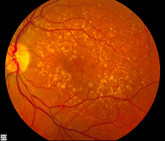
Biosimilars of ranibizumab

Biosimilars/General | Posted 30/10/2015

Last update: 4 December 2020

Ranibizumab is a monoclonal antibody fragment created from the same parent mouse antibody as bevacizumab. Ranibizumab inhibits angiogenesis (the formation of new blood vessels) by inhibiting vascular endothelial growth factor A (VEGF-A), a mechanism similar to bevacizumab [1]. 

Biosimilars of tocilizumab

Biosimilars/General | Posted 29/07/2016

Last update: 4 December 2020

Tocilizumab is a humanized monoclonal antibody against the interleukin-6 receptor (IL-6R). It is an immunosuppressive drug used mainly for the treatment of rheumatoid arthritis and systemic juvenile idiopathic arthritis, a severe form of arthritis in children. In Japan, tocilizumab is also approved for the treatment of Castleman’s disease, a rare benign tumour of B cells.

Biosimilar toolkit for cancer patients

Biosimilars/General | Posted 27/11/2020

The European Cancer Patient Coalition (ECPC) has launched a biosimilars e-module, or toolkit [1]. This aims to teach patients about the value of biosimilars. 

Biosimilars of infliximab

Biosimilars/General | Posted 13/02/2015

Last update: 27 November 2020

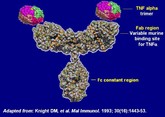
Infliximab is a chimeric monoclonal antibody against tumour necrosis factor alpha (TNF-α). It is used to treat autoimmune diseases, such as ankylosing spondylitis, Crohn’s disease, psoriasis, psoriatic arthritis, rheumatoid arthritis, and ulcerative colitis.

Biosimilars of insulin glargine

Biosimilars/General | Posted 08/04/2016

Last update: 27 November 2020

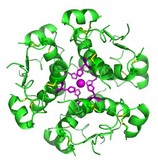
Insulin glargine is a long-acting basal insulin analogue, given once daily to help control the blood sugar level of those with diabetes. It consists of microcrystals that slowly release insulin, giving a long duration of action of 18 to 26 hours. Insulin glargine is indicated for the treatment of diabetes mellitus in adults, adolescents and children aged two years and above.

Alberta Biosimilars Initiative: switching policy updates in Canada

Biosimilars/General | Posted 20/11/2020

The Alberta government in Canada has announced updates to the Alberta Biosimilars Initiative. 

Biosimilars of darbepoetin alfa

Biosimilars/General | Posted 01/08/2014

Last update: 20 November 2020

Darbepoetin alfa is a synthetic form of erythropoietin. It stimulates erythropoiesis (increases red blood cell levels) and is used to treat anaemia, commonly associated with chronic renal failure and cancer chemotherapy.

Biosimilar advances for Celltrion Healthcare

Biosimilars/General | Posted 13/11/2020

South Korea-based biotechnology company Celltrion Healthcare announced advances related to their infliximab, omalizumab and adalimumab biosimilars.

GBMA publishes information resources on biosimilars for consumers and carers

Biosimilars/General | Posted 13/11/2020

The Generic and Biosimilar Medicines Association (GBMA), the representative body of generic and biosimilar medicine suppliers in Australia, has recently published information resources for consumers and carers on biosimilars.

Biosimilars applications under review by EMA – July 2020

Biosimilars/General | Posted 10/07/2020

The European Medicines Agency (EMA) is the body responsible for approval of biosimilars within the European Union (EU). A legal framework for approving biosimilars was established in 2003. Approval of biosimilars is based on an abbreviated registration process, which allows biosimilars manufacturers to provide a reduced package of information compared to originator drugs, provided they can prove ‘similarity’ to the originator or reference drug.

International Psoriasis Council releases consensus statement on biosimilars

Biosimilars/General | Posted 30/10/2020

The International Psoriasis Council (IPC) Biosimilar Working Group (BSWG) published their consensus statements for the use of biosimilars in the treatment of patients with psoriasis [1]. 

Australian diabetes organizations issue biosimilars position statement

Biosimilars/General | Posted 16/10/2020

In June 2020, the Australian Diabetes Society, Australian Diabetes Educators Association and Diabetes Australia, published a position statement on the use of biosimilar ‘insulins’ for diabetes.

Sustainable market scorecard represents gold-standard for biosimilar sustainability

Biosimilars/General | Posted 02/10/2020

IQVIA Institute and Medicines for Europe have recently launched Country Scorecards for Biosimilar Sustainability in 12 European countries [1]. The scorecards assess the level of competition, price evolution and volume development for seven key biological molecules – adalimumab, etanercept, infliximab, insulin glargine, insulin lispro, rituximab and trastuzumab – in each country. They also present a sustainability assessment and detail positive policy elements, challenges and solutions for each country.

FDA updates Purple Book database

Biosimilars/General | Posted 25/09/2020

The US Food and Drug Administration (FDA) has updated its searchable Purple Book database to include allergenic, cellular and gene therapy, haematologic and vaccine products.

Country scorecards show biosimilar sustainability

Biosimilars/General | Posted 18/09/2020

Biosimilars are an important component of sustainable health systems as they provide alternatives to originator biological products once those products no longer have market exclusivity. Europe has the world’s largest biosimilar market, accounting for approximately 60% of the global market. European countries therefore serve as valuable examples of successful approaches to biosimilar policy [1]. Nevertheless, across Europe, the level of competition among biosimilars differs widely by country and by molecule, as does the extent of their use and their impact on pricing. Much of this variability can be linked to differences in health system policy elements that contribute to sustainable market conditions for biosimilars.