Generics/General

US politicians form Affordable Drug Pricing Task Force

Generics/General | Posted 20/11/2015

On 4 November 2015, democratic members of the House Committee on Oversight & Government Reform launched the Affordable Drug Pricing Task Force, which its members say will bring about ‘meaningful action to combat the skyrocketing costs of pharmaceuticals’.

FDA making progress with ANDA backlog

Generics/General | Posted 06/11/2015

Despite an increase in the volume of abbreviated new drug application (ANDA) submissions, Type II API Drug Master Files (DMFs), supplements and amendments during financial year (FY)2014, the US Food and Drug Administration (FDA) has acted on more pending submissions compared to FY2013.

Brand-name drugmakers gain extra days of patent protection

Generics/General | Posted 23/10/2015

Brand-name drugmakers have gained some extra time, be it only days, for protection of their originator drugs after a ruling by the Court of Justice of the European Union clarified the date that drug patents expire.

Sun Pharma recalls drugs from troubled Halol plant

Generics/General | Posted 11/09/2015

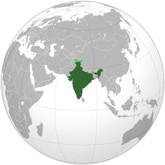
India-based Sun Pharmaceutical Industries (Sun Pharma) is once again having to recall drugs from its troubled Halol plant in Gujarat, India.

Generics applications under review by EMA – August 2015

Generics/General | Posted 04/09/2015

Generic medicines in Europe can be approved either centrally via the European Medicines Agency (EMA) or nationally via the local regulatory body [1]. Approval by EMA takes place by using a centralized procedure. This leads to approval of the product in all 28 European Union (EU) Member States and in Iceland, Liechtenstein and Norway. At a country level, if approval in a single EU Member State only is required, this can take place using the national procedure. However, as soon as a company seeks approval in two or more Member States, a decentralized procedure or mutual recognition procedure must be used [2].

Generics applications under review by EMA – 2013 Q4

Generics/General | Posted 10/01/2014

Last update:  20 January 2014

Generic medicines in Europe can be approved either centrally via the European Medicines Agency (EMA) or nationally via the local regulatory body [1]. Approval by EMA takes place by using a centralized procedure. This leads to approval of the product in all 28 European Union (EU) Member States and in Iceland, Liechtenstein and Norway. At a country level, if approval in a single EU Member State only is required, this can take place using the national procedure. However, as soon as a company seeks approval in two or more Member States, a decentralized procedure or mutual recognition procedure must be used [2].

EMA approves first generic imatinib

Generics/General | Posted 09/11/2012

EMA’s Committee for Medicinal Products for Human Use (CHMP) announced on 18 October 2012 that the agency had approved a generic version of imatinib.

Canada bans imports from three API facilities in India

Generics/General | Posted 17/10/2014

Just days after Canada’s federal department responsible for health was reported to be in talks with the US Food and Drug Administration (FDA) about Canadian generics maker Apotex, Health Canada has announced that it is to ban imports from two of Apotex’s facilities and from one site belonging to IPCA Laboratories in India.

Canada partially lifts import ban on Indian manufacturing sites

Generics/General | Posted 14/11/2014

In an attempt to avert drug shortages, Canada’s federal department responsible for health, Health Canada, has partially lifted an import ban on products from three Indian manufacturing facilities that were banned from importing generics into the country due to quality violations.

FTC says formula tweaking may be anticompetitive

Generics/General | Posted 09/10/2015

The US Federal Trade Commission (FTC) has come down on the side of generics makers in a case about formula ‘tweaking’ by brand-name drugmakers.

Indian pharma industry to get government support

Generics/General | Posted 03/07/2015

In a bid to promote the manufacture of pharmaceuticals in the country, the Indian Government has announced plans to set up a Rs 500-crore venture capital fund to provide cheaper loans to firms looking to establish or upgrade manufacturing facilities.

Generics applications under review by EMA – April 2015

Generics/General | Posted 05/06/2015

Generic medicines in Europe can be approved either centrally via the European Medicines Agency (EMA) or nationally via the local regulatory body [1]. Approval by EMA takes place by using a centralized procedure. This leads to approval of the product in all 28 European Union (EU) Member States and in Iceland, Liechtenstein and Norway. At a country level, if approval in a single EU Member State only is required, this can take place using the national procedure. However, as soon as a company seeks approval in two or more Member States, a decentralized procedure or mutual recognition procedure must be used [2].

Soaring generics prices come under increased scrutiny

Generics/General | Posted 27/04/2015

The US Department of Health and Human Services (HHS) is to investigate the soaring prices of generics in the US.

France outlines plans to promote generics

Generics/General | Posted 10/04/2015

The French are in general mistrusting of generics with many choosing to stay with brand-name drugs. However, in 2012, in order to combat rising healthcare costs, the French Government introduced measures to increase generic drug use in the country [1]. Now the government has gone a step further and is introducing a national action plan to encourage the use of generics in the country.

Dr Reddy’s US drug pricing comes under scrutiny

Generics/General | Posted 03/04/2015

Dr Reddy’s Laboratories, the India-based generics drugmaker, has been asked to share drug-pricing information with the attorneys general of California and Texas in November 2014. The two US States take their lead from an investigation into generics pricing at the national level.  

Health Canada clamps down on GMP compliance

Generics/General | Posted 20/03/2015

Canada’s federal health department Health Canada has written to its licensed drug and active pharmaceutical ingredients (API) manufacturers worldwide reminding them of their regulatory responsibilities and obligations. The department plans to step up planned and unplanned inspections of facilities, with the aim of taking timely and appropriate action where needed.

FDA cash to develop hard-to-copy generics

Generics/General | Posted 06/03/2015

The US Food and Drug Administration (FDA) is offering US$850,000 to research teams working on generics development. Funds will be split between three programmes: bioequivalence testing for long-acting periodontal drugs; developing methods for assessing long-acting injectable generics; and dissolution methods for long-acting levonorgestrel intrauterine system. Funds may be extended for a further two years.

Pfizer warns UK doctors not to prescribe generic Lyrica for pain

Generics/General | Posted 27/02/2015

Pharma giant Pfizer is fighting hard to protect one of its brand-name products, this time its epilepsy treatment Lyrica (pregabalin).

Generics applications under review by EMA – December 2014

Generics/General | Posted 23/01/2015

Generic medicines in Europe can be approved either centrally via the European Medicines Agency (EMA) or nationally via the local regulatory body [1]. Approval by EMA takes place by using a centralized procedure. This leads to approval of the product in all 28 European Union (EU) Member States and in Iceland, Liechtenstein, and Norway. At a country level, if approval in a single EU Member State only is required, this can take place using the national procedure. However, as soon as a company seeks approval in two or more Member States, a decentralized procedure or mutual recognition procedure must be used [2].

GPhA comments on generics’ legislation and Trans-Pacific Partnership

Generics/General | Posted 09/01/2015

Mr Ralph G Neas, President and CEO of the US Generic Pharmaceutical Association (GPhA), has commented on proposed legislation for generics in the US, as well as on provisions in the Trans-Pacific Partnership that he believes could impede access to medicines.