On 23 April 2026, the European Medicines Agency’s (EMA) Committee for Medicinal Products for Human Use (CHMP) adopted a positive opinion, recommending the granting of a marketing authorization for Intas’ ranibizumab biosimilar, Rexatilux, for the treatment of wet macular degeneration.
Ranibizumab is a monoclonal antibody fragment created from the same parent mouse antibody as bevacizumab. Ranibizumab inhibits angiogenesis (the formation of new blood vessels) by inhibiting vascular endothelial growth factor A (VEGF-A), a mechanism similar to bevacizumab [1].
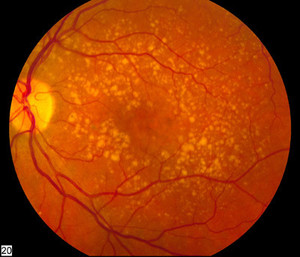
Ranibizumab can be used to treat macular degeneration by inhibiting VEGF, which is responsible for the excessive formation of blood vessels in the retina leading to progressive loss of vision. The monoclonal antibody drug is indicated for the treatment of wet age-related macular degeneration (AMD), macular oedema, degenerative myopia and diabetes complications; all conditions of the eye causing vision loss [2].
Intas Third Party Sales 2005 SL’s Rexatilux is a biosimilar of Roche/Genentech’s Lucentis (ranibizumab). Rexatilux will be available as a 10 mg/mL solution for injection, and must be administered by a qualified ophthalmologist experienced in intravitreal injections.
Approved indications of Rexatilux:
- neovascular (wet) age-related macular degeneration (AMD)
- visual impairment due to diabetic macular oedema (DME)
- proliferative diabetic retinopathy (PDR)
- macular oedema secondary to retinal vein occlusion (branch RVO or central RVO)
- choroidal neovascularisation (CNV).
The CHMP’s positive opinion was based on data demonstrating it is a biosimilar to the reference product, Lucentis. The EMA granted approval based on analytical, pharmacokinetic, and phase 3 clinical trial data proving it has comparable quality, safety, and efficacy to Lucentis.
Currently, six ranibizumab biosimilars are approved in Europe. The latest is Lupin’s Ranluspec [3]; others include Qilu Pharma’s Rimmyrah and Midas Pharma’s Epruvy (both approved in 2024), Bioeq/Teva’s Ranivisio and Stada’s Ximluci (both approved in 2022), and Samsung Bioepis’ Byooviz (approved in 2021).
There were no biosimilars approved by the EMA in January and March 2026.
Related article
FDA approves third interchangeable ranibizumab biosimilar Nufymco
References
1. GaBI Online - Generics and Biosimilars Initiative. Biosimilars of bevacizumab [www.gabionline.net]. Mol, Belgium: Pro Pharma Communications International; [cited 2026 May 25]. Available from: www.gabionline.net/Biosimilars/General/Biosimilars-of-bevacizumab
2. GaBI Online - Generics and Biosimilars Initiative. Biosimilars of ranibizumab [www.gabionline.net]. Mol, Belgium: Pro Pharma Communications International; [cited 2026 May 25]. Available from: www.gabionline.net/biosimilars/general/Biosimilars-of-ranibizumab
3. GaBI Online - Generics and Biosimilars Initiative. EC approves golimumab biosimilar Gotenfia and ranibizumab biosimilar Ranluspec [www.gabionline.net]. Mol, Belgium: Pro Pharma Communications International; [cited 2026 May 25]. Available from: www.gabionline.net/biosimilars/news/ec-approves-golimumab-biosimilar-gotenfia-and-ranibizumab-biosimilar-ranluspec
Permission granted to reproduce for personal and non-commercial use only. All other reproduction, copy or reprinting of all or part of any ‘Content’ found on this website is strictly prohibited without the prior consent of the publisher. Contact the publisher to obtain permission before redistributing.
Copyright – Unless otherwise stated all contents of this website are © 2026 Pro Pharma Communications International. All Rights Reserved.



 0
0










Post your comment