Generics

Innovation in the generics industry
The decrease in innovation in the originator pharmaceutical industry is leading to an increase in innovation in the generics pharmaceutical industry, according to new research [1].

Indian FDA wants to increase use of generics
The Commissioner of Indian Food and Drug Administration (FDA) has denied allegations by physicians and pharmacists in India that the bioavailability of generic drugs is doubtful.

Actavis makes agreement for generic abuse-deterrent oxycodone
US generics maker Actavis (formerly Watson) announced on 26 April 2013 that it had reached an agreement with Purdue Pharma (Purdue) to settle all outstanding patent litigation related to Actavis’ generic version of Purdue’s abuse-deterrent formulation of OxyContin (oxycodone).
Quality of generics in South Africa
A study of the quality of generic medicines in South Africa has shown large differences in the perception and the actual quality of generics [1].

Daiichi Sankyo and Ranbaxy announce synergy in Brazil
India-based Ranbaxy Laboratories (Ranbaxy) and its Japanese parent company Daiichi Sankyo announced on 17 April 2013 plans to integrate their generic and brand-name drug business operations in Brazil.

Generics applications under review by EMA – 2013 Q1
Last update: 6 September 2013
Generic medicines in Europe can be approved either centrally via the European Medicines Agency (EMA) or nationally via the local regulatory body [1]. Approval by EMA takes place by using a centralized procedure. This leads to approval of the product in all 27 EU member states and in Norway, Iceland and Liechtenstein. At a country level, if approval in a single EU Member State only is required, this can take place using the national procedure. However, as soon as a company seeks approval in two or more Member States, a decentralized procedure or mutual recognition procedure must be used [2].
FDA is dragging its feet over oxycodone generics
The US patent for Purdue Pharma’s (Purdue’s) blockbuster painkiller OxyContin (oxycodone) expired on 16 April 2013, but FDA has yet to approve any generic versions. Now, FDA has announced that it will not approve any generics of the original formulation OxyContin.

Mylan gains approval for generic of Valeant’s Zovirax
Generics giant Mylan announced on 3 April 2013 that its subsidiary Mylan Pharmaceuticals had received final approval from FDA for its abbreviated new drug application (ANDA) for acyclovir ointment 5%.

AstraZeneca settles rosuvastatin lawsuit
UK-based AstraZeneca announced on 25 March 2013 that it had entered into a deal concerning US patent infringement litigation against Actavis (formerly known as Watson Pharmaceuticals) and EGIS Pharmaceuticals with respect to Actavis’ generic rosuvastatin zinc product.

Cost savings from use of generic medicines in Ireland
Ireland has one of the lowest usages of generics in the EU. However, in order to try to address this, the country introduced a new bill – Health (Pricing and Supply of Medical Goods) Bill 2012 – on 16 September 2012. Authors Dunne et al. discuss how the proposed changes could affect health care in Ireland [1].

New entrant to generic injectables market
Medical technology company Becton Dickinson announced on 28 March 2013 that FDA had approved the first drug in its line of prefilled generic injectables. This can only be good news for FDA who has been fighting to alleviate drug shortages in the US, most of which are due to shortages in generic sterile injectables.
Mylan launches generics and reaches settlement over metformin
Generics giant Mylan has launched generic versions of fenofibrate capsules, cidofovir injection and levalbuterol. The company has also resolved patent litigation with Shionogi and Andrx related to metformin.
Why choose generic medicines initiative launched in Australia
The Australian Generic Medicines Industry Association (GMiA) and the Pharmacy Guild of Australia announced on 22 March 2013 the launch of a joint initiative: Why choose generic medicines?
Use of generic medicines in Ireland
Ireland’s Department of Health and Children intends to introduce a system of reference pricing and generics substitution in Ireland, which will greatly increase the utilization of generics and generate significant cost savings, whilst at the same time, increasing the accessibility and affordability of essential medicines. Authors Dunne et al. discuss Ireland’s history with the use of generic medicines [1].
Changes in risperidone use in Austria after introduction of generics
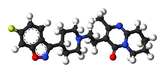
Currently, many governments have introduced austerity reforms to control pharmaceutical expenditure. In Austria, efforts have been made to both increase the use and lower the prices of generics. The problem is that antidepressants are not like other drugs, such as cholesterol-reducing medicines, where switching from originators to generics is not seen as a problem. For antidepressants the patient’s treatment is often tailored to meet their specific needs and there is resistance to switch products in stable patients.

Actavis confirms generic Alzheimer’s patch patent challenge
US generics maker Actavis (formerly Watson) confirmed on 8 March 2013 that it had filed with FDA an amendment to its abbreviated new drug application (ANDA) for rivastigmine transdermal system to include the 13.3 mg/24 hr dosage strength. Actavis’ product is a generic version of Novartis’ Exelon Patch, which is used to treat people with mild to moderate dementia associated with Alzheimer’s or Parkinson’s disease.

Use of venlafaxine in Austria after introduction of generics
Trying to reduce expenditure on medicine is a major driving force for reforms by many governments. This includes Austria, where measures have been introduced to lower generics prices and enhance their use. However, the situation for newer antidepressants and atypical antipsychotic medicines (AAPs) is different to proton pump inhibitors (PPIs) (anti-reflux), statins (cholesterol-reducing), and renin-angiotensin inhibitor (blood-pressure reducing) drugs. For antidepressants therapy, it is more often tailored to meet the patient’s needs and there is resistance to switch products in stable patients.

India may move away from compulsory licensing
The Indian Government, in a move that goes away from recent decisions, has suggested that the prices of patented pharmaceutical drugs be controlled by linking them to the country’s per capita income rather than by issuing compulsory licences.
Mylan to acquire Strides Arcolab’s injectable generics business
Generics giant Mylan announced on 27 February 2013 that it has signed an agreement to acquire generic injectables maker Agila Specialties (Agila) from Strides Arcolab for US$1.6 billion in cash.

Patients’ knowledge and perceptions about generics in Australia
Most Australians know about generics but are not sure if they prefer brand-name or generic drugs, according to a survey carried out by Australian researchers and published in December 2012 in the Journal of Pharmacy Practice and Research [1].

UN urges WTO to keep cheap drug deal for poor countries
Two United Nations (UNs) agencies are urging the extension of an exemption for least-developed countries on patent protection to ensure that HIV/AIDS and other lifesaving drugs remain affordable for the poor.

Pfizer delays generic celecoxib entry in US
Pharma giant Pfizer announced on 5 March 2013 that the US Patent Office had given the company an extra 18 months of exclusivity for its blockbuster anti-inflammatory painkiller Celebrex (celecoxib).

FDA approves generic opiate-dependency drugs
On 22 February 2013, FDA approved two generic versions of the drug Suboxone (buprenorphine/naloxone), a treatment for recovering heroin addicts.

Ranbaxy restarts generic atorvastatin production
India-based generics giant Ranbaxy Laboratories (Ranbaxy) announced on 25 February 2013 that it has restarted production of its generic cholesterol lowering drug atorvastatin after solving contamination problems.

Pfizer asks US Court to reconsider generic Reglan ruling
Pfizer has asked the US Supreme Court of Alabama to reconsider its decision of 4 January 2013, which would allow generics patients to sue brand-name drugmakers.

Generics policies in Europe have room for improvement
In Europe, generics policies have not yet been implemented to their full extent, according to authors Vogler and Zimmerman, reporting on the 2011 Pharmaceutical Pricing and Reimbursement Information (PPRI) Conference [1, 2].

Conflict-of-interest policies reduce brand-name prescribing
Psychiatrists who are exposed to conflict-of-interest (COI) policies during their residency are less likely to prescribe brand-name antidepressants after graduation than those who train in residency programmes without such policies, according to a new study by researchers from the Perelman School of Medicine at the University of Pennsylvania, USA [1].
Watson buys women’s health company Uteron
Generics giant Watson Pharmaceuticals, now known as Actavis, announced on 23 January 2013 that it has completed the acquisition of Belgium-based Uteron Pharma for US$150 million in cash up front, and up to US$155 million in potential future milestone payments.

Watson becomes Actavis
Watson Pharmaceuticals announced on 24 January 2013 that the company had officially adopted Actavis as its new global name under which it will now trade on the New York Stock Exchange.

HIV generics could significantly cut treatment costs
The US Government could save almost US$1 billion in the first year alone by using generic rather than brand-name drugs for the treatment of HIV patients, according to a study published in the Annals of Internal Medicine [1].

First generic versions of Duetact and Maxalt approved
First-to-file generics from Mylan and Sandoz have been approved by FDA for rizatriptan benzoate and pioglitazone hydrochloride/glimepiride tablets, respectively.

Generic antiepileptic drugs bioequivalent to brand-name drugs
Results of a study, reported by Dr Ravi Juluru and co-authors at the American Epilepsy Society’s 66th Annual Meeting, held in San Diego, USA on 30 November–4 December 2012, shows that generic slow-release drugs for seizure disorders are ‘equivalent’ to their brand-name counterparts [1].

Overview of research on regulatory issues for generics in 2012
Period: January to August 2012
Regulatory issues are a challenge facing generics of all kinds, and one that may limit the competitiveness and sustainability of the generics industry. However, with the cost of medicines becoming a more and more important factor for patients and the healthcare industry as a whole there is a need for both harmonization of regulatory requirements between different regions, e.g. Canada, EU and US, as well as a need for clarity in the regulatory requirements for certain generics.

Pharmascience and Kolmar to create Korean generics joint venture
Canadian generics maker Pharmascience and Korea-based Kolmar Holdings (Kolmar) announced on 2 January 2013 that they had entered into an agreement to create a new joint venture, Pharmascience Korea, for the marketing of Canadian-made bioequivalent medicines.

Brand-name and generics labels don’t match
According to US federal law generics manufacturers have to have the same labelling as their brand-named counterparts. However, a new study has found that in practice this is often not the case.

Watson submits ANDA for generic cancer drug
Watson Pharmaceuticals confirmed on 28 December 2012 that Actavis, which was acquired by Watson in October 2012, has filed an Abbreviated New Drug Application (ANDA) with FDA seeking approval to market generic bortezomib. Actavis’ ANDA product is a generic version of Millennium Pharmaceuticals’ (Millennium) cancer drug Velcade (bortezomib).

Generics applications under review by EMA – 2012 Q4
Last update: 6 September 2013
Generic medicines in Europe can be approved either centrally via the European Medicines Agency (EMA) or nationally via the local regulatory body [1]. Approval by EMA takes place by using a centralized procedure. This leads to approval of the product in all 27 EU member states and in Norway, Iceland and Liechtenstein. At a country level, if approval in a single EU Member State only is required, this can take place using the national procedure. However, as soon as a company seeks approval in two or more Member States, a decentralized procedure or mutual recognition procedure must be used [2].

Patent cliff winners and losers
During 2011 and 2012 a whole host of patents have expired on many blockbuster drugs. In fact it was estimated that in 2012 US$33 billion of sales would be lost due to the patent cliff [1].
French Government pushing generics
The French are in general mistrusting of generics with many choosing to stay with brand-name drugs. However, with rising healthcare costs and austerity measures hitting healthcare budgets, the French Government has had to introduce measures to increase generic drug use in the country.

US pharmacists positive about generic drugs
Pharmacists, prescribers and patients often voice concerns about the safety and efficacy of generic drugs when they are substituted for brand-name drugs. Results of a survey, reported by Ms Laurie Scudder, shows that pharmacist and prescriber opinions on generic drugs in the US are generally positive, see Figure 1.

Safety and efficacy of generic tenofir/lamivudine/efavirenz combination
New research shows the safety and efficacy of a generics combination of tenofir, lamivudine and efavirenz in the treatment of HIV-infected patients in Thailand [1].

Overview of research on ‘specific’ policies aimed at generics in 2012
Period: January to August 2012
Countries around the world have embraced generics due to their cost-saving potential. Many governments already have policies in place to promote the use of generic medicines, and as health systems face continuous cost pressures and demands to invest in new technologies, generics can only become more important.

Black-box safety warnings and the future of generic drug liability
Generic medicines currently have no responsibility for adding warnings about adverse effects of their medicines. Despite the US Supreme Court ruling that it was ‘impossible’ to force generics manufacturers to update their labels with the latest warnings, many feel that they have an ethical responsibility to do just that [1].

Ranbaxy not the only Indian generics maker subject to FDA recalls
It seems that Ranbaxy Pharmaceuticals (Ranbaxy) is not the only Indian generics manufacturer who has been subjected to FDA recalls. It now comes to light that Dr Reddy’s Laboratories (Dr Reddy’s) and Aurobindo Pharma (Aurobindo) have also had to recall key generic drugs during 2012.

Overview of research on ‘general’ policies aimed at generics in 2012
Period: January to August 2012
Many governments around the world already have policies in place to promote the use of generic medicines, and with the increasing cost of health care and restrictions on budgets the need for low cost, quality medications can only become more important.

The ethics of generic drug liability
What responsibility should the manufacturers of generic medicines bear for warnings about adverse effects of their medicines? Indeed, what responsibility should be borne by the original manufacturers of these drugs? What happens if an adverse effect is noticed after the drug has been in use for many years? Such questions are being pondered in the US after a recent ruling in which the Supreme Court decided it was ‘impossible’ to force generics manufacturers to update their labels with the latest warnings.

India urged to drop cost-based drug policy
Indian industry trade group the Associated Chambers of Commerce and Industry of India (ASSOCHAM) has urged the Indian Government to drop its cost-based price controls on both brand-name and generic drugs and instead introduce a market-based pricing policy.

Ranbaxy recalls generic atorvastatin in US
Ranbaxy Pharmaceuticals (Ranbaxy) has fallen foul of FDA once again. The Indian generics major announced on its US website that it is conducting a voluntary recall for certain batches of its atorvastatin calcium tablets, a generic version of Pfizer’s blockbuster cholesterol-reducing drug Lipitor.

History and future of pay-for-delay
Pay-for-delay is a constant issue in both the US and Europe. But how did these settlements first come about and how have US courts attitudes towards such deals affected the pharmaceutical market [1].

Alleviating concerns around generic antiepileptic medications
Reports that some patients with epilepsy were more likely to experience seizures and hospitalisation after switching from brand-name drugs to generic alternatives have led to concerns about generic antiepilepsy drugs (AEDs). A recent review, however, argues that the onset of seizures following a switch may be due more to the disruption of normal routine than the choice of medication. The authors suggest that AEDs are relatively safe and effective compared to innovator drugs.

Generics competition for Pfizer’s sildenafil
Apotex Corporation, Dr Reddy’s Laboratories, Mylan, Torrent Pharmaceuticals and Watson Laboratories have all received FDA approval for bioequivalent generic versions of Pfizer’s Revatio (sildenafil citrate – Viagra in Europe) in the US market following the approval by FDA of the generics companies abbreviated new drug applications (ANDAs) for sildenafil tablets.
FDA grant to study generic versus brand-name transplant drugs
FDA has given a grant to the University of Cincinnati, Ohio, USA, in order to support a study into a commonly used immunosuppressive drug for transplant patients, tacrolimus.
German court rules Seroquel XR patent invalid
AstraZeneca has lost another battle to protect its blockbuster anti-psychotic drug Seroquel (quetiapine fumarate) against generics.

EMA approves first generic imatinib
EMA’s Committee for Medicinal Products for Human Use (CHMP) announced on 18 October 2012 that the agency had approved a generic version of imatinib.
Overview of clinical research on generics in 2012
Period: January to August 2012
Generic drug alternatives to brand-name prescription medications are becoming increasingly important in the global drug market as governments strive to contain healthcare costs and as an increasing number of prescription drugs lose patent protection.

FDA ordered to let Watson sell generic Actos
Watson Pharmaceuticals (Watson) has finally won its legal battle to be able to sell a generic version of Takeda Pharmaceutical’s diabetes drug Actos (pioglitazone hydrochloride). A US judge ordered FDA to approve Watson’s generic pioglitazone against the agency’s decision to bar Watson during the first six months of generics availability.
Momenta versus Amphastar and the safe harbour provision
On 3 August 2012, the US Federal Circuit issued a decision holding that the safe harbour* provision of the Hatch-Waxman Act 35 U.S.C. § 271(e)(1) covers post-approval testing as long as it is ‘reasonably related’ to the submission of information to FDA. The case involved was that of Momenta Pharmaceuticals (Momenta) versus Amphastar Pharmaceuticals (Amphastar) (Federal Circuit No. 2012-1062, 8/3/12).
Mylan sues FDA over Ranbaxy’s generic Diovan exclusivity
US-based Mylan has sued FDA for refusing to grant approval to sell a generic version of Novartis’s heart treatment, Diovan HCT (valsartan/hydrochlorothiazide), ‘after a competitor failed to get the drug on the market in time’.
Teva withdraws generic antidepressant from US
Israel-based Teva Pharmaceutical Industries (Teva), the world’s largest generics manufacturer, has removed its Budeprion XL 300 mg generic version of GlaxoSmithKline’s antidepressant Wellbutrin XL (bupropion) from the US market after regulators said it is not therapeutically equivalent to Wellbutrin XL 300 mg.
FDA gives generics greater importance
The Office of Generic Drugs has been promoted to the highest position within FDA because of the great amount of work and income/expenditure now associated with generics.

Mylan debuts first generic Diovan HCT and Antivert in USA
Mylan is first off the mark once again with its latest generics launch. Mylan announced on 21 September 2012 that its subsidiary Mylan Pharmaceuticals has received final approval from FDA for its Abbreviated New Drug Application (ANDA) for valsartan/hydrochlorothiazide tablets USP.
Generics applications under review by EMA
Last update: 6 September 2013
Generic medicines in Europe can be approved either centrally via the European Medicines Agency (EMA) or nationally via the local regulatory body [1]. Approval by EMA takes place by using a centralized procedure. This leads to approval of the product in all 27 EU member states and in Norway, Iceland and Liechtenstein. At a country level, if approval in a single EU Member State only is required, this can take place using the national procedure. However, as soon as a company seeks approval in two or more Member States, a decentralized procedure or mutual recognition procedure must be used [2].
Bayer loses Nexavar compulsory licence appeal
Bayer has lost its appeal to the Indian Government’s decision to grant a compulsory licence for its cancer drug Nexavar (sorafenib).

Suggestions for increasing generics use in Abu Dhabi
This concluding article in a series of three suggests ways of improving the use of generics in Abu Dhabi.

Use of generics in Abu Dhabi
The second of three articles examining how to increase generics use in Abu Dhabi.

Canada takes another step towards generics
For the first time, two of Canada’s biggest health insurance companies are going to require that generics be prescribed if one is available.

Hospira acquires manufacturing, R & D facilities in India
On 29 August 2012, US-based Hospira announced an agreement to acquire an API (active pharmaceutical ingredient) manufacturing facility, together with an associated research and development (R & D) facility, from Orchid Chemicals & Pharmaceuticals. The modern, FDA-approved facility is costing approximately US$200 million. Acquisition of this leading Indian pharmaceuticals company is expected to reduce Hospira’s costs, support continuity of supply of key antibiotic products and pave the way for future API development [1].
Maximising the potential of generics in Abu Dhabi
Introduction
All residents in Abu Dhabi have access to health care via mandatory health insurance. Nationals, who comprise 20% of the population with two-thirds under 30 years of age and half under 19 years of age, have automatic access to comprehensive health care funded by the government. In 2008, all nationals received cards giving free access to health care and choice of provider in both the public and private sectors [1].
Mylan generics launches in the US
Mylan has 166 abbreviated new drug applications (ANDAs) pending Food and Drug Administration approval representing US$78.4 (Euros 61.3) billion in annual sales. Thirty-five of these are potential first-to-file opportunities, representing US$25.1 (Euros 19.6) billion in annual brand sales (2011 IMS Health figures).

Poor quality pharma ingredients abound in China
Lack of regulatory enforcement in China is allowing poor quality pharmaceutical ingredients to be sold to drug manufacturers with potentially dangerous or even fatal consequences for patients.

Impax settles patent dispute with Genzyme
Impax Laboratories (Impax) announced on 4 September 2012 that it had reached an agreement with Sanofi subsidiary, Genzyme Corporation (Genzyme), to settle pending US litigation with regard to the production and sale of generic versions of Renvela (sevelamer carbonate) and Renagel (sevelamer hydrochloride).

Austria could save Euros 256 million by using more generics
A recent study by IMS Health Austria (IMS) revealed that in Austria healthcare payers could have saved more than a quarter billion Euros during 2011 if physicians would have prescribed more generics to their patients.

Misunderstandings regarding generics in Pakistan
This article is the third of three articles covering the results of a survey investigating the knowledge, perception and attitude of general practitioners (GPs) towards generic medicines in Karachi, Pakistan [1].

Injectables may be next on Big Pharma shopping list
The injectables division of Indian pharmaceutical company Strides Arcolab (Strides), known as Agila, is becoming an increasingly attractive potential acquisition for Big Pharma who are looking to expand their portfolios. Strides, based in Bangalore, may already be considering selling Agila, which produces a range of injectable generic medicines for the treatment of cancer and infections, with Pfizer as one possible purchaser.

Pfizer reaches agreement with Impax over generic Detrol
Pfizer has reached an agreement with Impax Laboratories (Impax) over the production and marketing of a generic drug alternative to the bladder-control treatment Detrol LA (tolterodine tartrate). The two companies have ‘settled a patent lawsuit’ based on a licence agreement dated 16 August 2012 that prohibits Impax from selling generic versions of Detrol LA ‘except as permitted under the settlement and license agreement.’

Coupons help Big Pharma to fend off generics
Pfizer’s success at using co-pay coupons to prevent patients switching from brand-name products to generics is encouraging other pharmaceutical giants to follow suit.

Wockhardt gains approvals for ‘steady stream’ of generics
Wockhardt has won FDA approval for four generics products in a matter of days. On 16 August 2012, the India-based company announced the final approval and immediate product launch of the anti-blood clotting drug clopidogrel bisulfate in 75 mg tablet form, and tentative approval for 300 mg-containing tablets.
Facts about generics for patients
The costs of health care are rising across Europe through ageing populations resulting in more patients with chronic diseases, stricter clinical targets for managing patients with long term (chronic) diseases, the continued launch of new and more expensive drugs as well as rising patient expectations.

Attitude of general practitioners towards generics in Pakistan
The second of a series of three articles reports on a survey aimed at exploring the knowledge, perception and attitude of general practitioners towards generic medicines in Karachi, Pakistan [1].

FDA approval for generic diabetes drug Actos
On 17 August 2012, FDA gave final approval to Mylan Pharmaceuticals for the first generic version of Actos (pioglitazone hydrochloride tablets), for the treatment of type 2 diabetes. The approval covers tablets containing 15 mg, 30 mg and 45 mg pioglitazone.


